10 December 2012

Giverny

It has long been a dream of mine to visit the house and gardens of my favorite impressionist painter, Monet. So how excited was I when GW organized a day trip to Giverny and this dream came true? Let's just say, VERY. 

Giverny is just northwest of Paris, the cutest little French town you can imagine. Monet lived there with his second wife and their kids. He had two gardens: the famous water lily garden and a flower garden. The water lily garden was actually his second garden, which he designed himself. The flower garden is directly in front of his house and has a more organized plot.

Everything was SO BEAUTIFUL. Even though we went in the fall, most of the flowers were still in bloom. I took a LOT of pictures, but here are some of the best ones, that capture the beauty of the area:

We toured the second garden first, with the pond of water lilies.

Weeping willow trees are my favorite.


the famous Japanese bridge

a few water lilies still blooming

standing on the Japanese bridge

with Jessica and Jillian

entering the original flower garden, with a view of Monet's house in the background

the walkway to the house


Monet's very pink house. We got to tour inside it as well, but we weren't allowed to take pictures.
So now I can cross another place off my must-visit list. Dream fulfilled! Now on to the next one :)

A bientot!

05 December 2012

Vaux-le-Vicomte


Vaux-le-Vicomte is a chateau near the city of Melun, just southeast of Paris, designed by architect Louis le Vau. AUP organized a day trip there one Saturday and I got the chance to explore the amazing place. The chateau is currently owned by Patrice and Cristina de Vogüé, the Comte et Comtesse de Vogüé, with whom AUP has a healthy relationship. We were able to meet the count and countess, and the count himself gave us a tour of the gardens. It was all very cool. He was a nice man, very down-to-earth, not at all what I had imagined a count to look like:


There he is, in the blue fleece.


The garden is one of the most impressive things about this property. The designer, Andre le Notre, is actually the same man who went on to design the gardens of Versailles. So there are a lot of similar elements. He liked to add 'hidden treasures' as you walked through, providing a sense of mystery when you discovered something new.


So here is a mini history lesson for all those who have never heard of this chateau. It was constructed for Fouquet, the finance minister to Louis XV. However, another man, Colbert (who wanted the position of finance minister for himself) convinced the king that Fouquet was stealing royal funds. So he was overthrown and the chateau was repossessed. They even went so far as to take all of the garden ornaments, sculptures, trees, and flowers and use them for the gardens at Versailles.

Colbert was the sneakiest of all. All of Fouquet's tapestries, with his family emblem of the squirrel, were taken and redone so that the squirrel was replaced with a snake, Colbert's family emblem. Today, many of these tapestries have been recovered and restored with the original squirrel.


Overall, the whole property is a wonderful place to explore. It gives an interesting insight into an important part of French history. It is also just a beautiful space. While we were visiting, we saw multiple couples taking wedding pictures throughout the grounds:


And of course I had to get a few shots of myself:


A bientot!

18 November 2012

Jardins des Tuileries

The Tuileries Palace was originally built by a French queen, Catherine de'Medici. It was located near the Louvre, which was the king's palace. The palace itself was burnt down and destroyed, but today its gardens still exist. The name 'Tuileries' is French for 'tiles', because of the tile production that took place on that site previously.

the eastern edge of the gardens, with the Louvre close by in the background

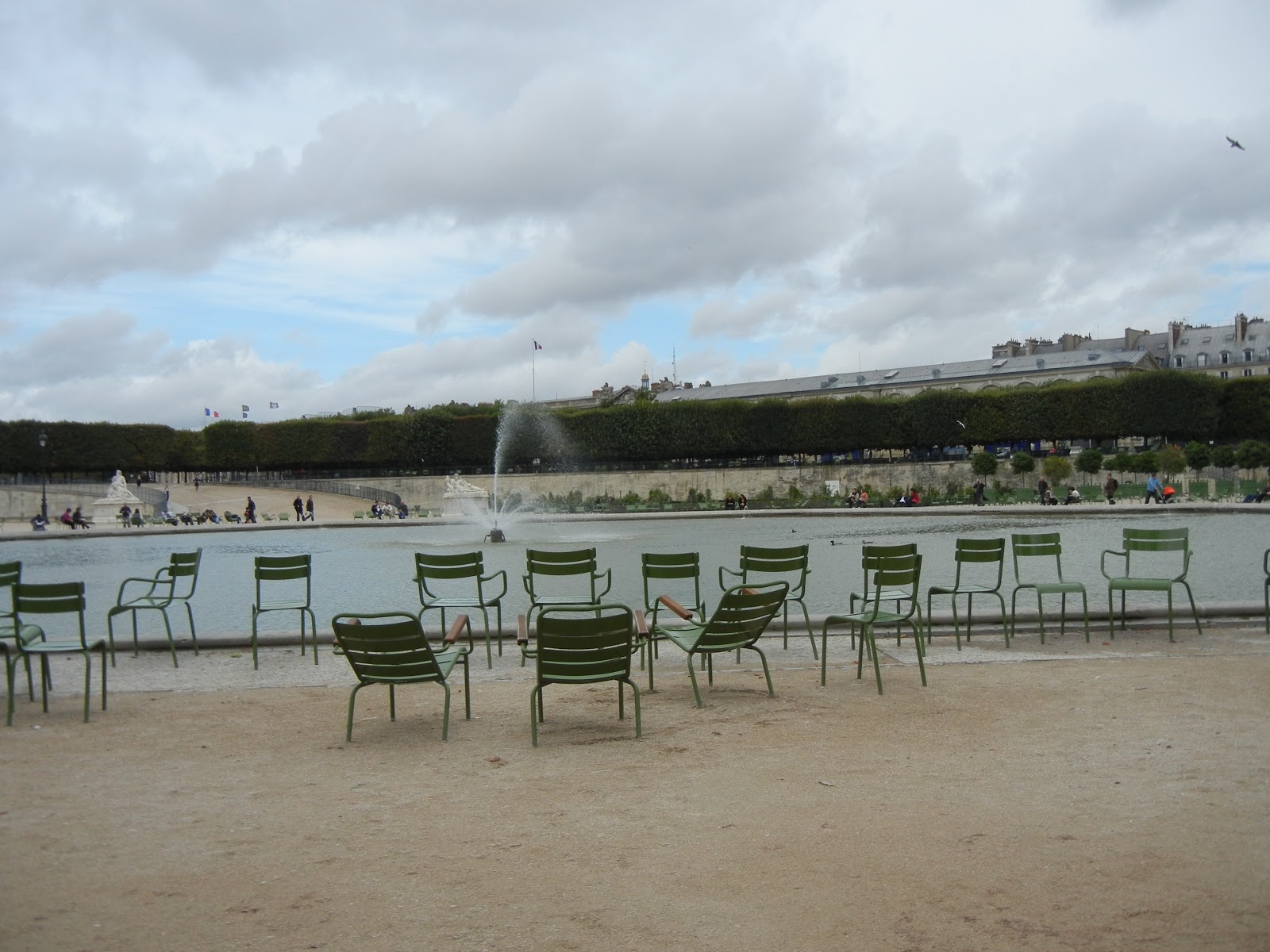
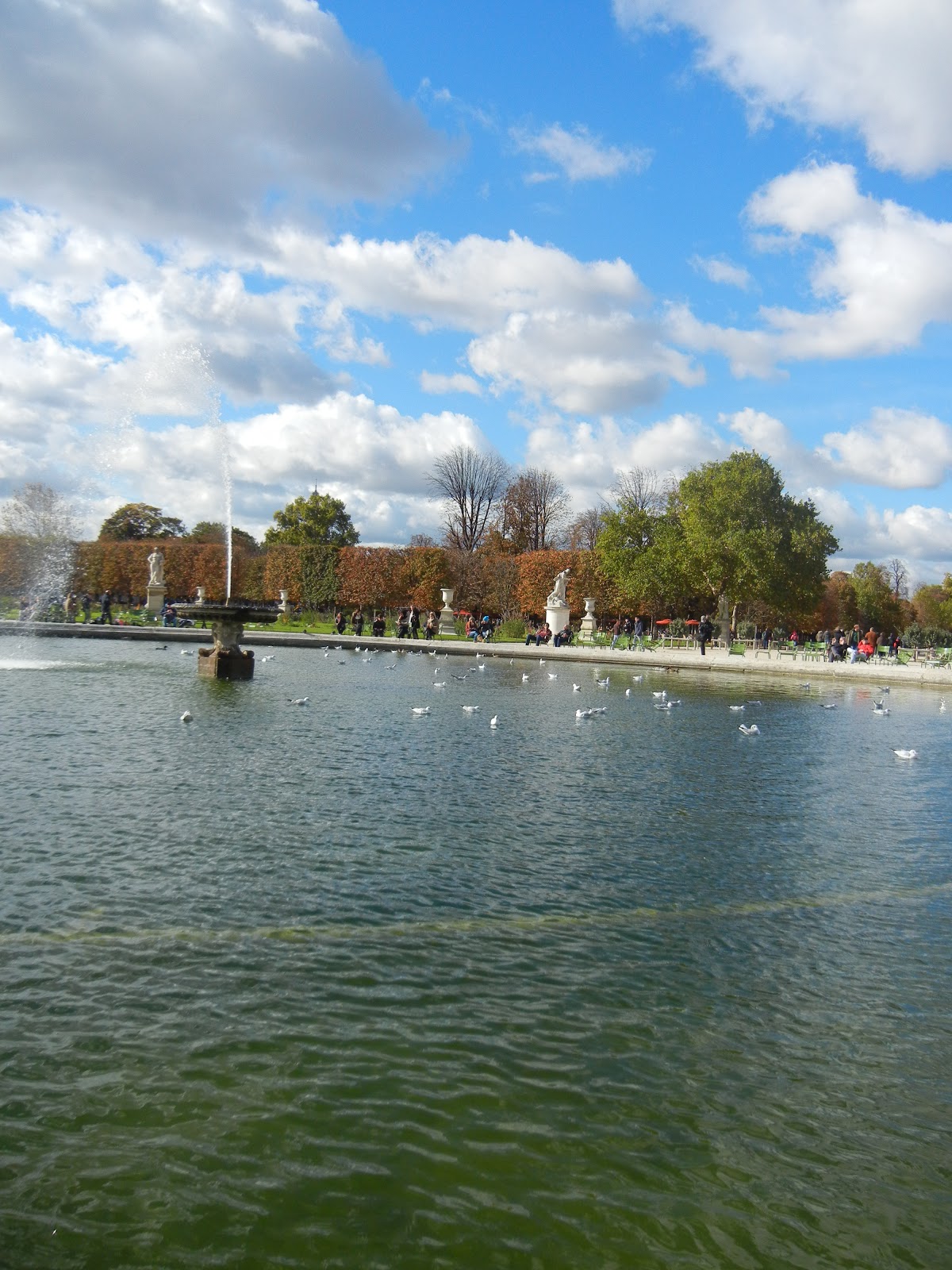
The Tuileries Gardens are a great place to hang out and just enjoy the Paris atmosphere. Like the Luxembourg Gardens, there are many areas with chairs to sit and relax. What I like most about this space, though, are the many fountains everywhere.


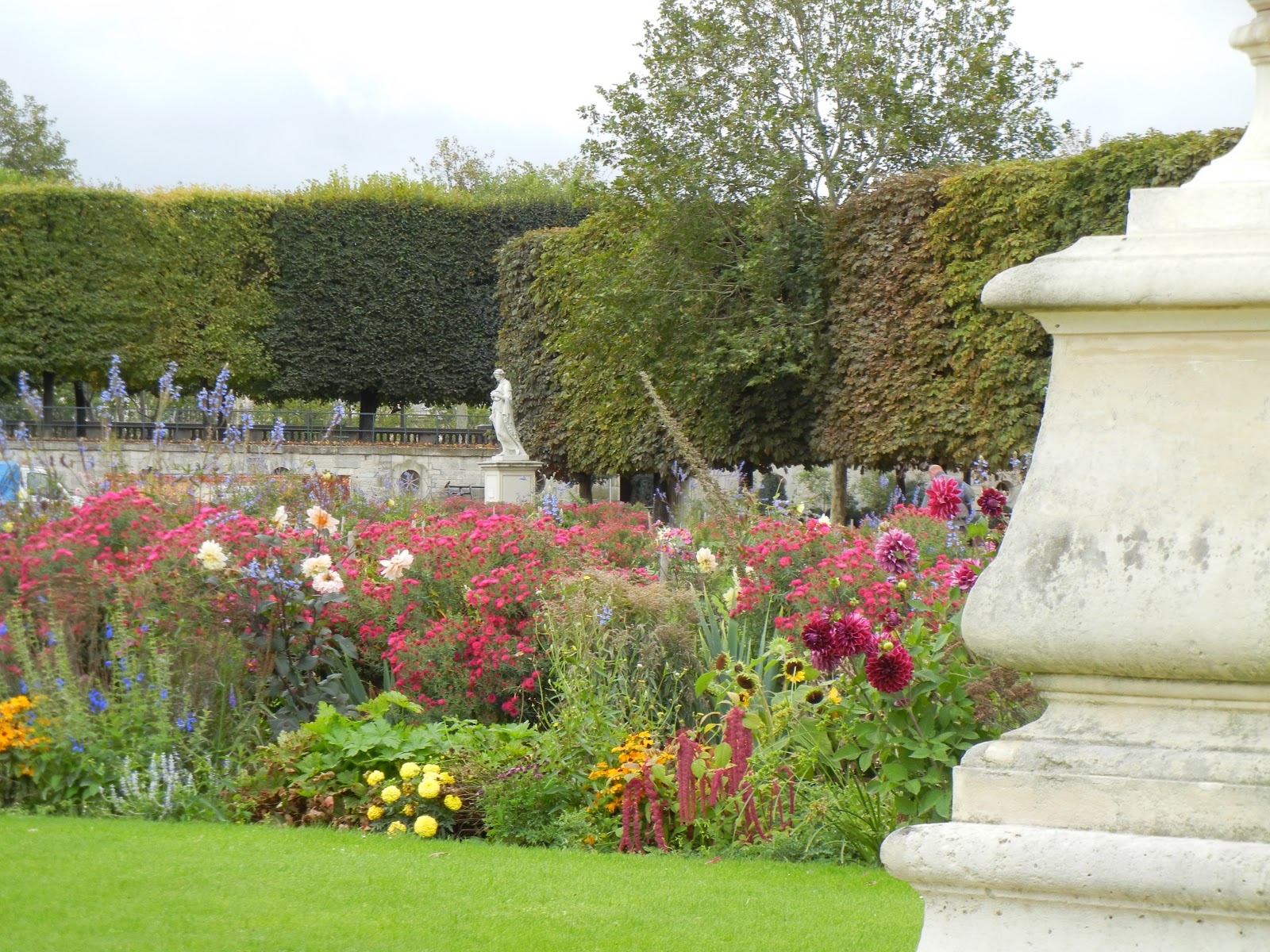
As it is a garden, nature is all around you. There are so many beautiful flower displays. Even on a rainy day, the multitude of colors add an extra brightness to the area.


The Tuileries Gardens have a lot of activities, attracting tourists and locals alike. Besides the lounging areas, there are also many little cafes scattered throughout the park. I've also noticed that the gardens are a popular place for jogging. I've seen more joggers in this park than anywhere else in the city.

a small pond with seating around it, and a cafe in the background

a few of the many joggers seen along the autumn paths

A bientot!

17 November 2012

Puppies in Paris

Animals are surprisingly very present in the city of Paris. I guess I'm used to DC, where pets are scarce since the city is more of a work environment than a residential one. But here they are everywhere.

Dogs are so well-behaved here. A lot of the time, owners don't have them on leashes. But as terrifying as that would be to my little sister, they really aren't necessary. The dogs are well trained and don't pay any attention to those that pass them by. They stay by their owners' sides without any issue. It's really kind of amazing.

You also see dogs in public places, like on the metro or even in restaurants. Again, this is a strange phenomenon for someone from America, where animals are strictly forbidden in places such as these. Most of the time you never even notice them, though.

I'd have to say, the only downside for so many dogs on the streets of Paris is the mess they leave behind. There isn't grass along the sidewalks for dogs to use. And Parisian dog owners aren't the best at cleaning up after their pets. When walking down the street, make sure you watch where you step...

A bientot!

15 November 2012

Musee Rodin

Like most museums in Paris, the building of Musee Rodin was originally built to function as a small mansion and was eventually converted into what we use it for today. It is now a museum dedicated to the work of famous sculptor, Auguste Rodin. Rodin is most well-known for his works "The Gates of Hell" and "The Thinker."


The hotel particulier (small mansion) turned museum
His most famous work of art, "The Gates of Hell," is an amazing collage of mayhem. It conveys disorder and complexity in a very fascinating way. It is also an important piece because of its influence on Rodin's subsequent works. Many of the components in the Gates have gone on to become sculptures on their own.
"The Gates of Hell"
 

Rodin used casting and enlarging techniques to make different sized replicas of his own works.
Look closely at the three figures on top.
Look familiar? "Trois ombres" was later enlarged into this monumental piece.

His other most famous piece "The Thinker" was also created in this way. It's surprising how much more of an impact the sculpture makes due to its change in size.
The gardens of the estate were my favorite part. Filled with beautiful flowers and amazing sculptures, what's not to love? Although the museum itself inside was interesting as well. Not only did it contain many different models of Rodin's works in various stages of completion, but it also displayed some of the paintings and sculptures of Rodin's good friends - artists such as Van Gogh and Monet.


view of the garden


For those interested in Rodin, check out the museum's website. It has information on a lot of the works on display there, as well as a more in-depth background of the artist. http://www.musee-rodin.fr/en


A bientot!

09 November 2012

Le Marais

One of my favorite places to check out in Paris is the Marais. The Marais is a neighborhood in the 4th arrondissement. It got its name back when Paris was first being developed. The area was originally a marshland, which was then drained and used as a new area to build houses. In French, 'marais' translates to 'marshland.' So there you go.

Nowadays, it's a cute little neighborhood to wander and maybe even just get lost in. It's full of narrow, winding cobblestone roads that seem to crisscross in every direction. And because of its history, you can find some of the oldest houses in Paris here:

Also, as I've mentioned before, a bonus is the fact that the Marais has become a primarily Jewish community. Saturday is their day of rest, so Sunday becomes a busy day for businesses instead. My favorite Sunday activity is heading over to the Marais and grabbing falafel for lunch.

The streets are filled with a lot of expensive and chic fashion boutiques -wonderful for window shopping. But if you're looking for a deal, there are also many thrift shops scattered around if you know where to look. Once, I even came across a random yard sale-type thing going on in a public square. It looked like people from all over the neighborhood came to sell old clothes and books and things. I've only seen it once though, so that's not a common occurrence.

Finally, the cutest little spot to hang out and relax is the Place des Vosges. It is the oldest planned square in Paris. It's the perfect place to sit and people watch, or just enjoy the picturesque fountains and trees. It is surrounded on all sides by identical red brick buildings, which give it extra charm:


A bientot!